Introduction: A Companion in the Field
The Cane Corso, an ancient Italian molosser, has been closely tied to rural life and hunting traditions for centuries. Its role in wild boar and badger hunting reveals the breed’s physical prowess, versatility, and deep-rooted bond with farmers, hunters, and shepherds across southern Italy. Not merely a guardian, the Cane Corso was a vital working dog that could face the most dangerous game with courage and intelligence.
Origins of a Functional Breed
The Cane Corso was never a specialized hunting dog like a pointer or retriever. It was a multi-purpose working dog, capable of guarding homes and livestock, pulling carts, and—most notably—assisting in hunting expeditions.
With its athletic, compact frame, wide chest, strong limbs, and powerful jaws, the Corso was ideally suited to immobilize dangerous prey. A tenacious and intelligent animal, it had a powerful bite, formidable musculature, and a character described as loyal, courageous, and adaptable. Hunters and farmers relied on it not only for security but also as a partner in chasing and stopping game like boars, badgers, wolves, deer, and more.
Boar Hunting with the Cane Corso
Wild boar hunting was one of the most prestigious and risky forms of hunting in southern Italy. Boars—especially large males—are powerful, aggressive animals, equipped with razor-sharp tusks. They can fatally injure both dogs and humans. Hunting boar required not only strength but strategic collaboration between dogs and hunters.
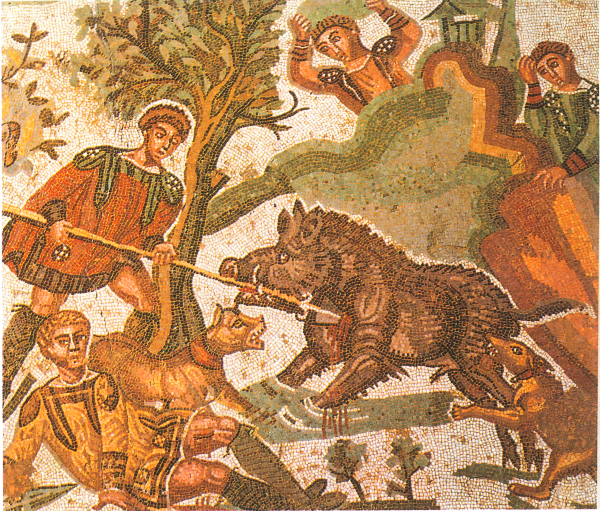
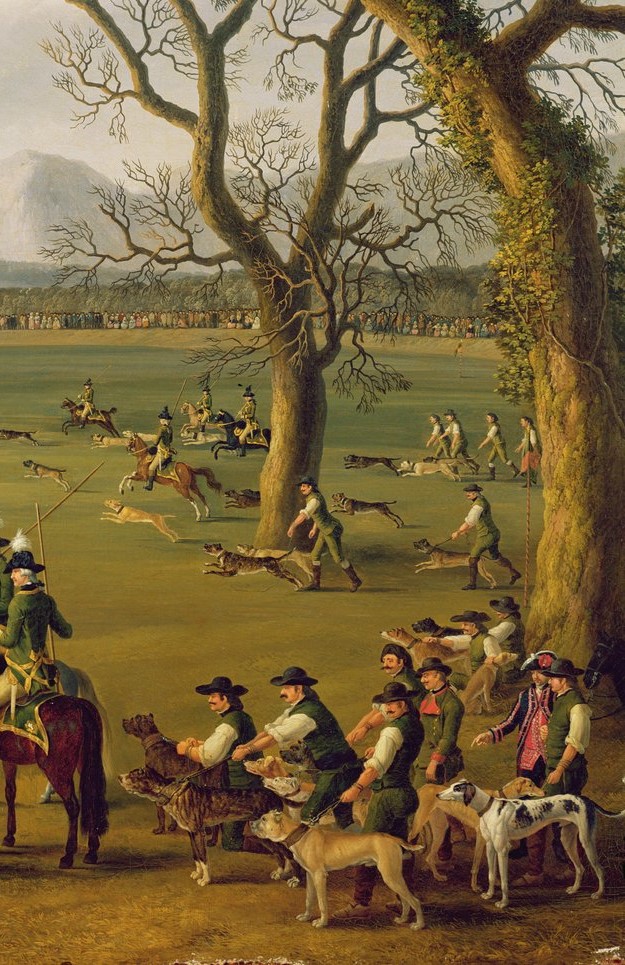
In ancient and Renaissance depictions—such as mosaics in the Villa Romana del Casale (3rd–4th century AD) and 18th-century Capodimonte porcelain—the Cane Corso is frequently shown immobilizing boars, while faster hounds like the straviere pursued and cornered them. The Corso’s role was to attack and hold, usually seizing the ear or snout, giving the hunter the opportunity to kill the animal with a spear or knife.
Training Methods
Training began early. Puppies were taken to the woods and introduced to the scent and shape of the prey using taxidermied boars or badgers hidden in bushes. Once familiarized, they observed adult dogs confronting a live pig. Eventually, they were released to join the action. The goal was to build instinct, timing, and precision.
Corsi with brindled or wheat-colored coats and a black mask were preferred, as these colors blended well in forests and underbrush. A white stripe on the muzzle was seen as a sign of good hunting instinct.
Physical Preparation
Proper nutrition was crucial. Before a hunt, dogs were fed whey and a blend of ground corn, barley, or oats to maintain energy and avoid digestive stress. After the hunt, they were given a protein-rich mash of meat, lard, bones, and blood to restore lost energy.
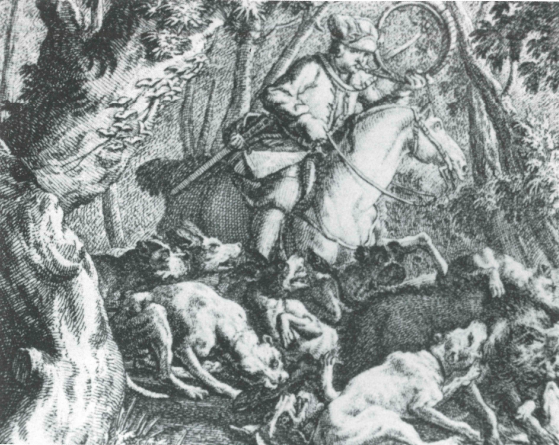
Whether hunting on foot or horseback, packs were typically composed of Corsi, mezzosangue (half-breeds with scent hounds), and stravieri (swift sighthound crosses). Each had a tactical role in the operation, and all had to be well-trained and coordinated.
Badger Hunting: Precision and Strategy
Badger hunting, rooted in the rural traditions of southern Italy, required stealth, coordination, and power. The badger was a prized prey: its pelt was used for crafting saddles and harnesses, its fat melted for medicinal balms, and its meat considered a delicacy.
This nocturnal hunt relied on stealth and strength. Because firearms would damage the pelt, they were avoided. A typical team included two or three mezzosangue (Corso x scent hound crosses) and one Cane Corso.
The mezzosangue combined the scenting ability of the hound mother with the silent tracking and calm aggression of the Corso father. These dogs tracked the badger silently, even across water, until they reached it before it could retreat to its den. They surrounded and harassed it until the hunter arrived and unleashed the Corso.
The Cane Corso, selected in light-colored (ideally wheat) coats for better visibility in darkness, would then deliver the final strike. With a powerful frontal blow from its chest, it knocked the badger off balance, then killed it with a precise bite behind the neck. In case the kill wasn’t instant, the hunter needed to act fast and deliver a targeted blow to the badger’s head—distinguishing dog from prey in the dark was critical, hence the coat preference.
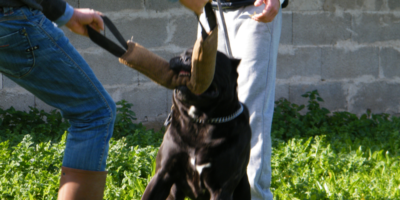
Many badger hunts were conducted by rural guards, the only inhabitants of abandoned countryside during the malaria-ridden off-seasons. Their only companion was the Cane Corso. Over months of solitude, a deep mutual understanding would develop. These men, alone by day and night, would mark badger dens during daylight patrols and return at night with their dogs to hunt, often without support dogs, relying solely on the Corso’s training, instinct, and intelligence.
The Corso’s Versatility in Hunting Hybrids
To refine its working abilities, the Cane Corso was often crossbred with other dogs. These crosses were functional hybrids, created for specific purposes:
Leporarius magnus / Straviere: a Corso crossed with a large Italian greyhound to increase speed and agility for pursuit.
Mezzosangue: a Corso crossed with a female scent hound, resulting in a dog with improved tracking ability, silent movement, and endurance.
Mezzocorso: a Corso crossed with an Abruzzese sheepdog, producing a dog equally capable as a hunter, guardian, and herder. This hybrid likely contributed to the development of the “true” Abruzzese sheepdog.
These hybrids were typically first-generation only, not bred beyond their utility, and designed to combine the best traits of each parent.
Preserving Function Through Form
Even practices like ear and tail cropping, often criticized today, had practical origins. Cropped ears and docked tails reduced the risk of injury during fights with prey. Uncropped features provided vulnerable targets for wild animals to seize during combat. These practices were born of experience and necessity, not aesthetics.
Cropping techniques were rudimentary but effective, often done with scissors or an axe within days of birth, with the mother licking the wound to heal it. Ears were cut around three months of age and cauterized with ash. In a curious tradition, the amputated parts were sometimes fried and fed to puppies — a symbolic ritual meant to enhance tenacity.
Conclusion: A Hunter by Nature, Not by Chance
The Cane Corso is not simply a guardian with a fierce appearance. Its genetics, structure, and temperament are shaped by generations of selective use in practical hunting. From wild boars to badgers, from forests to farmlands, the Corso has long proven itself as a courageous, loyal, and intelligent working dog.
Understanding its real hunting heritage is essential — not just for historical accuracy, but to preserve the essence of this remarkable Italian breed.